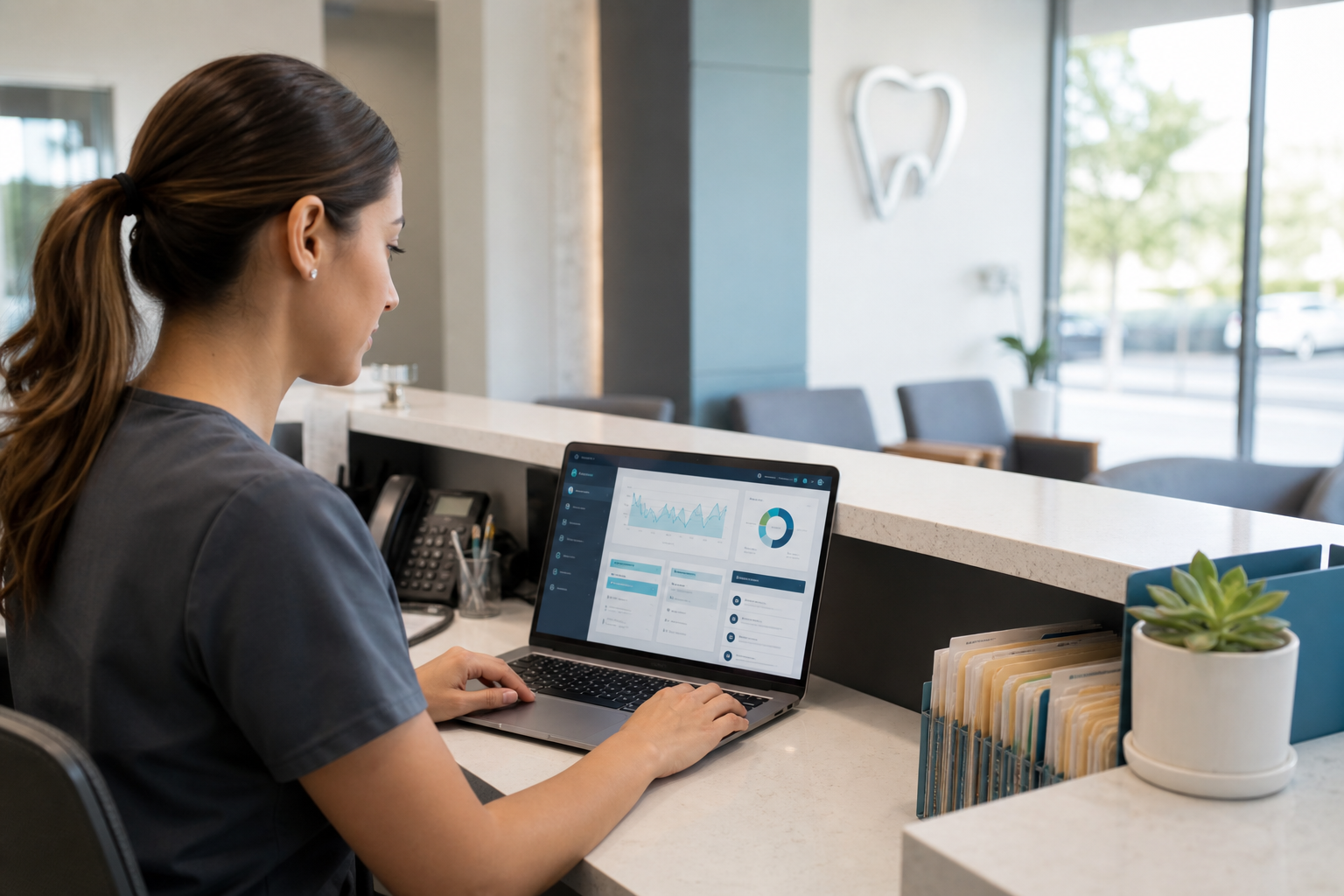
How to Run a Dental Morning Huddle That Actually Saves Time
A practical 10-minute huddle framework for dental teams to improve visibility, handoffs, and same-day problem solving without slowing the day down.

A well-run morning huddle can save your team far more time than it takes. Instead of discovering broken schedules, missing records, or insurance issues after the day starts, your team gets aligned in one short, focused conversation.
The key is not making the huddle longer or more detailed. It is making it actionable, consistent, and tied to the systems your team already uses.
Why the morning huddle matters
The morning huddle is the first chance each day to turn a busy dental office into a coordinated one. When it is done well, it helps the front desk, assistants, hygienists, and doctors see the day the same way and solve problems before patients arrive.
A strong huddle also reduces avoidable interruptions. Instead of passing questions back and forth during the morning rush, your team can quickly flag schedule gaps, treatment needs, unpaid balances, broken appointments, and any special patient considerations.
What a good huddle should accomplish
A useful morning huddle should do five things:
- Confirm the day’s schedule and identify risk points
- Assign responsibility for open tasks and patient follow-up
- Surface insurance, billing, or treatment plan issues early
- Prepare the clinical team for special patient needs
- Create accountability for same-day action
If your huddle is not producing decisions or next steps, it is probably turning into a meeting instead of a workflow tool.
Keep it to 10 minutes or less
The time limit is what makes the morning huddle effective. A short, repeatable meeting encourages discipline and prevents the conversation from drifting into unrelated issues.
A simple timing structure
Use a structure like this:
- Minutes 0–2: Review the schedule and key patient flow concerns
- Minutes 2–5: Flag insurance, treatment, and billing issues
- Minutes 5–7: Confirm assignments and handoffs
- Minutes 7–9: Identify same-day opportunities and risks
- Minute 10: Close with clear ownership and any urgent reminders
This format works because it keeps the team moving and forces prioritization. If a topic needs more discussion, assign a follow-up owner and handle it after the huddle.
Build the huddle around three priorities
Most practices try to cover too much. To save time, focus on just three priorities: schedule visibility, task handoffs, and same-day problem solving.
1. Schedule visibility
Start with the schedule itself. Look for holes, delays, high-production opportunities, and patients who may need extra time or support.
Examples of what to check:
- New patients who may need welcome materials or records collected
- Long procedures that could create downstream delays
- Same-day openings that can be filled quickly
- Patients with a history of cancellations or no-shows
- Hygiene appointments that can be combined with treatment opportunities
Using dental scheduling software makes this much easier because the team can see the live schedule, appointment details, and patient context in one place instead of switching between systems.
2. Task handoffs
A morning huddle should make handoffs visible. If one team member is expecting another to complete a task, the handoff should be spoken aloud and assigned clearly.
Examples include:
- Front desk confirms missing insurance cards
- Assistant prepares a patient with a difficult medical history
- Hygienist notes a treatment acceptance opportunity
- Office manager follows up on an unpaid claim
A good rule is this: if a task can be forgotten, it should be mentioned in the huddle.
3. Same-day problem solving
Some issues need to be addressed before the first patient sits down. Common examples include broken appointments, late-arriving lab work, missing consent forms, or treatment plan questions.
The morning huddle should not try to solve every problem on the spot. Instead, it should identify the issue, decide the immediate next step, and assign the owner.
Use a repeatable agenda template
A standardized agenda prevents the huddle from depending on who is leading it that day. The best template is one your team can follow without thinking too hard.
Sample 10-minute agenda
1. Schedule scan
- Review the day’s patients
- Flag openings, double-book risk, and long visits
- Identify any special accommodations
2. Financial and insurance review
- Check for outstanding balances
- Review insurance verification issues
- Confirm preauthorizations or coverage concerns
3. Clinical and treatment opportunities
- Note patients due for treatment
- Highlight cases with unscheduled treatment plans
- Confirm follow-up on pending accepts
4. Front desk and handoff items
- Missing forms
- Records requests
- Lab or referral follow-up
- Same-day calls or confirmations
5. Owner or manager priorities
- Staffing adjustments
- Production goals
- Key office announcements
This agenda is simple enough to repeat daily but structured enough to keep people focused.
Assign clear roles so the meeting does not stall
Morning huddles become inefficient when everyone speaks at once or waits for the doctor to direct every topic. Assigning roles keeps the meeting moving and creates accountability.
Suggested role assignments
Huddle leader
- Usually the office manager, lead front desk team member, or doctor
- Keeps the meeting on schedule
- Moves the group from one agenda item to the next
Schedule reviewer
- Often a front desk team member
- Reviews the day’s appointments and calls out risk points
Clinical lead
- Often a lead assistant or hygienist
- Flags treatment, chairing, or patient readiness issues
Financial/insurance lead
- Often office manager or billing coordinator
- Notes balances, claims, or verification concerns
You do not need four different people for every practice. In a smaller office, one person may cover more than one role. The important part is that each responsibility is owned by someone specific.
Make your software the source of truth
The fastest huddles rely on one live system for schedule, patient records, treatment plans, billing, and notes. If the team has to check multiple spreadsheets, paper notes, and separate tools, the meeting will slow down immediately.
A cloud-based platform like dental practice management software helps teams work from the same information in real time. That matters because the huddle is only as accurate as the data behind it.
What to pull from software before the huddle
Before the meeting starts, the huddle leader or assigned team member should review:
- The day’s live schedule
- Patients with incomplete treatment plans
- Pending insurance tasks
- Billing alerts or balances
- Notes from previous visits
- Open follow-up items
If your system includes a dental billing software workflow, the office can spot financial issues early instead of discovering them after the patient checks out.
Best practice: review, do not dig
The huddle is not the time to search deeply through charts. It is the time to review highlighted information and confirm action items. The software should make it easy to see what needs attention at a glance.
Keep the discussion practical and patient-focused
The most effective huddles stay close to the patient experience. Team members should be able to answer a few simple questions quickly:
- Who is coming in today?
- What might delay or complicate the visit?
- What should the next team member know?
- What action needs to happen before the appointment starts?
Example of a useful huddle conversation
A patient is scheduled for a crown prep, but the lab case has not arrived. In the huddle, the team confirms:
- The patient is still being seen
- The doctor will complete another procedure if needed
- The front desk will update the patient if timing changes
- The assistant will monitor the lab status after the huddle
That is a useful huddle because it produces a plan in less than a minute.
Common huddle mistakes to avoid
Even a good agenda can lose effectiveness if the team falls into bad habits.
Talking about everything except today
The morning huddle is not the place for long policy debates, staffing grievances, or broad planning meetings. Those topics belong elsewhere.
Letting one person dominate
If only the doctor or office manager speaks, the team loses valuable front-line insight. The front desk may know about a patient issue the clinical team has not heard, and vice versa.
Skipping follow-up ownership
A huddle without owners is just a conversation. Every issue should end with a named person and a deadline, even if the task is small.
Relying on memory alone
The team should not have to remember every handoff. Use software notes, tasks, and patient records so that the huddle feeds directly into daily operations.
For teams that want a better way to track those action items, a dental patient portal can also reduce phone tag by making forms, messages, and reminders easier for patients to manage on their side.
A simple huddle checklist your team can use tomorrow
Print this or keep it in your software workflow:
- Review today’s schedule
- Identify openings, delays, and high-risk appointments
- Confirm missing forms, records, or insurance details
- Note treatment opportunities and follow-up needs
- Assign owners for unresolved tasks
- End with a quick final check: who is doing what by when?
If your practice wants extra guidance on team workflows, the resources page can help you build more consistent systems across the office.
How to keep the huddle useful over time
A morning huddle is not a one-time improvement. To keep it effective, review it periodically and adjust based on what your team actually needs.
Monthly huddle check-in questions
Ask your team:
- Are we keeping it under 10 minutes?
- Are we catching problems earlier than before?
- Are task handoffs clearer?
- Are we using the same agenda every day?
- Are we closing the loop on assigned items?
If the answer to most of these is yes, the huddle is doing its job. If not, simplify it further.
Make it part of the workflow, not an extra meeting
The best morning huddles feel like part of opening the office, not an additional burden. They support the schedule, clarify ownership, and help the team start the day with less uncertainty.
Conclusion
A dental morning huddle should not slow the day down. When it is short, structured, and built around real workflow issues, it helps your team prevent mistakes, solve problems faster, and keep patients moving smoothly through the schedule.
If you are ready to make your morning huddle easier to run and more useful in practice, try DentiFlow to keep your schedule, patient records, treatment plans, billing, and team communication in one cloud-based system.